Most people wait to call for help because the damage looks “manageable.” A little water in the hallway. A smoky smell that fades by morning. A musty odor you assume is just “old building” vibes. But the real cost usually shows up later: warped materials, hidden moisture, stubborn odors, mold growth, and longer downtime for homes and businesses.
That’s why knowing the early warning signs matters. This guide breaks down 9 signs it’s time to call a professional cleaning and restoration company, with practical examples for homeowners, restaurants, warehouses, offices, and property managers. If you’re searching for a restoration cleaning company because something feels “off” in your space, use the checklist below to decide what needs attention now versus what can wait.
Sign 1: Water is present, or it was present and things still feel damp
Standing water is obvious. The sneakier problem is what you can’t see: moisture under flooring, behind baseboards, inside wall cavities, and under carpet padding. The U.S. EPA notes that water-damaged materials should be dried within 24–48 hours to reduce the chance of mold growth.
Common scenarios
A supply line leak behind a sink
A toilet overflow that “seems cleaned up”
A roof leak that drips only during heavy rain
Sign 2: You smell a musty odor or see new spots on walls or ceilings
Mold doesn’t always show up as a dramatic black patch. Often it starts as light discoloration, a persistent musty smell, or recurring “allergy-like” irritation in one area of the building. If moisture is still present, cleaning visible spots without addressing the source can turn into an endless loop.
The key is moisture control and fast response. The EPA’s guidance is clear: fix the water issue and clean promptly.
Sign 3: Smoke odor or soot keeps coming back after a fire or electrical incident
Even small fires can spread smoke particles farther than you expect, especially through HVAC returns, ceiling voids, and porous materials (carpet, upholstery, insulation). Odor “masking” sprays can make things worse by layering fragrance over contamination instead of removing it.
For restaurants and food-service operators, fire risk is not rare. NFPA reports thousands of structure fires each year in eating and drinking establishments (their research summaries show significant annual incident volume).
Sign 4: You had a kitchen flare-up, grease smoke, or suppression discharge
A quick flare-up on a cookline can leave greasy residues on walls, ceilings, and vents. And if a suppression system discharges, cleanup needs to be fast and careful to avoid corrosion, slip hazards, and food-safety issues. This is where specialized cleaning processes and documentation matter, especially when reopening depends on inspections and insurer requirements.
Sign 5: “DIY cleanup” is spreading dust, ash, or odors
After a fire event (or heavy soot exposure), dry sweeping and improper vacuums can kick fine particles back into the air. Safety guidance for fire cleanup often emphasizes HEPA filtration and avoiding methods that re-aerosolize debris.
If your cleanup is making the building smell worse or triggering coughing, headaches, or irritation, it’s time to stop and bring in trained help.
Sign 6: You’re dealing with sewage, gray water, or “unknown source” moisture
Any water that may contain contaminants (sewage backup, drain overflow, floodwater, or mystery leaks in commercial restrooms) is not a “mop and bleach” situation. It can require containment, proper disposal, and controlled drying.
Industry standards like ANSI/IICRC S500 outline professional procedures and precautions for water damage restoration across residential and commercial environments.
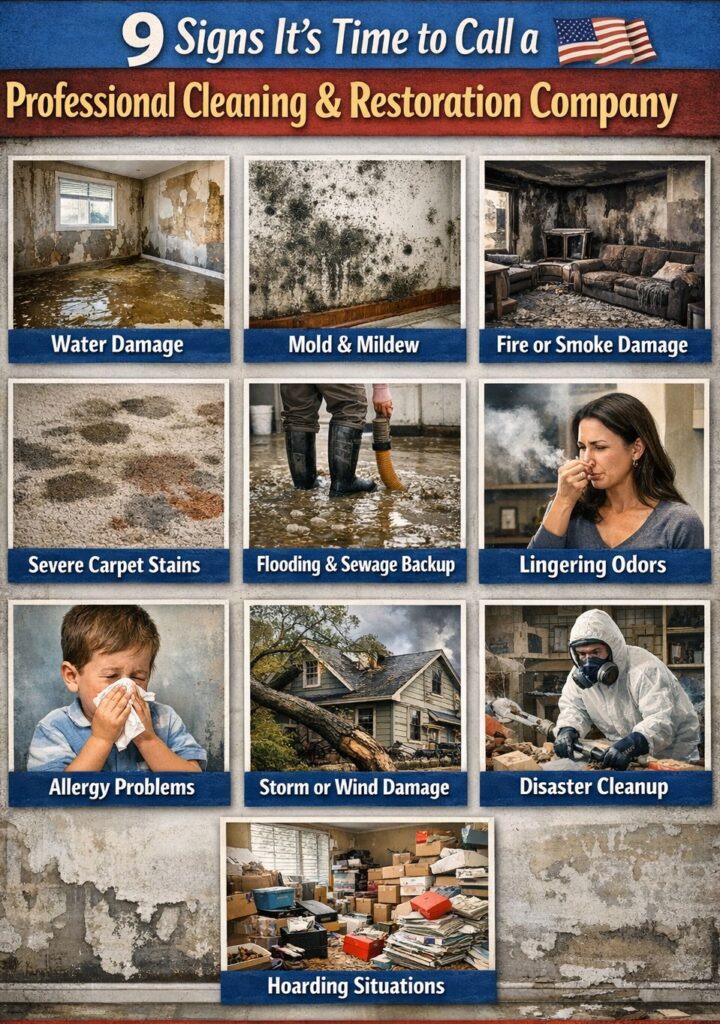
Sign 7: Your carpets, rugs, or upholstery have repeated stains, smells, or damp padding
If odors keep returning after spot treatments, the issue may be deeper than the fibers you can see. In many cases, the padding or subfloor has absorbed moisture or contaminants. That’s when professional cleaning services can go beyond surface-level cleaning and actually restore the material (or confirm it needs replacement).
This is also where a reputable team can explain what’s salvageable versus what’s not, so you’re not throwing money at repeat “quick fixes.”
Sign 8: Your HVAC system is spreading dust, odor, or “stale air” complaints
If multiple people in the building mention headaches, irritation, or a lingering smell that’s stronger when the system runs, treat it as a building health signal. HVAC pathways can circulate fine particles from soot, construction dust, or contamination after a loss event.
For businesses, this is more than comfort. It affects staff productivity, customer experience, and in some cases, reopening timelines.
Sign 9: The damage is starting to impact operations, tenants, or insurance timelines
This one is especially relevant for property managers, business owners, and commercial investors: once downtime begins, every extra day hurts.
A useful data point: Insurance industry reporting shows that “water damage and freezing” is a common claim category and includes meaningful average claim severity over multi-year periods.
Translation: these issues add up fast when they’re not handled early.
When your situation involves multiple stakeholders (tenants, staff, inspectors, adjusters), it helps to bring in a team that knows how to document conditions, stabilize the site, and coordinate restoration steps.
What a reputable “pro” should do (without the sales pitch)
When you hire a qualified team (including national providers like Steamatic that offer water, fire, and mold services), the real value is process, not hype:
Assessment: moisture mapping, source identification, scope planning
Containment: limiting cross-contamination in occupied spaces
Controlled drying and cleaning: using equipment and methods that match the material and category of loss
Documentation: photos, readings, and clear notes for decision-making.
FAQs: 9 Signs It’s Time to Call a Pro:
Q1. How long does water damage restoration take?
The timeline for water damage restoration depends on the size of the affected area, the category of water involved, and how quickly the process begins—but most residential jobs take anywhere from 3 to 7 days for the drying phase alone, with full restoration sometimes extending to several weeks if structural repairs are needed. Minor water damage caught within the first 24 hours can often be stabilized and dried in 3 to 4 days. More serious situations involving subfloor saturation, wall cavity moisture, or contaminated water sources take considerably longer. The single biggest factor affecting timeline is how fast you act—calling a professional restoration cleaning company within the first 24–48 hours dramatically reduces both the scope of damage and the total time to recovery.
Q2. Can I clean smoke damage myself if the fire was small?
You can wipe visible soot, but smoke particles and odor often travel into HVAC, porous materials, and hidden cavities. If smells return or irritation continues, professional cleaning is usually needed.
Q3. What’s the difference between “cleaning” and “restoration”?
Cleaning removes soil and residues. Restoration focuses on returning materials and spaces to a safe, usable condition after damage (water, fire, mold), including drying, deodorizing, and controlled remediation.
Q4. Who should I call for water damage in my house?
When you have water damage in your house, the first call should be to a licensed professional water damage restoration company—not a general contractor or a cleaning service, but a team specifically trained in moisture assessment, containment, and controlled drying. Seek a company that follows IICRC S500 standards, carries proper insurance, and can respond quickly, since the 24–48 hour window before mold risk increases is tight. Your homeowner’s insurance provider should be your second call, as most policies cover sudden and accidental water damage, and a restoration company can help document conditions for your claim. In the North Indianapolis area, Steamatic’s combination of restoration expertise and documented processes makes them a reliable first call when water damage, sewage backup, or storm-related moisture is involved.
Final Thoughts:
If you take one thing from this list, let it be this: the earlier you act, the more likely you are to save materials, reduce downtime, and avoid repeat problems. If any of these signs sound familiar, calling a qualified restoration cleaning company is often the most practical next step, not the most expensive one.