
You don’t really think about the water lines in your building until the ceiling over your reception desk starts dripping on a Monday morning. Within minutes, carpets are soaked, power strips are at risk, customers are turning around at the door, and your team is asking the same question you are: “How long are we going to be closed?”
For small and mid-sized businesses, a major water incident isn’t just a mess. It’s a threat to payroll, client relationships, and your reputation. FEMA data suggests that roughly one in four businesses disrupted by a major disaster never reopen at all. When you’re already operating on tight margins, every hour of downtime matters.
The good news: you can dramatically cut that downtime with a simple plan and the right partner. Having a trusted water remediation company on speed dial, knowing your first-hour checklist, and setting up your building for faster drying can mean the difference between a short disruption and a weeks-long shutdown.
This guide walks you through practical, real-world steps any North Indianapolis business owner or property manager can use before, during, and after a water loss.
Why Speed Matters More Than You Think:
Water doesn’t just sit politely on the floor. It spreads into wall cavities, wicks up drywall, seeps under vinyl, and can reach wiring, IT closets, and mechanical rooms quickly. The longer materials stay wet, the higher your risk of structural damage, odor, and mold growth.
For commercial properties, the stakes are big. One national review of claims found that the average water damage restoration loss for commercial properties is around $89,000, not including the revenue you lose while you’re closed. Another analysis showed water is among the leading causes of property insurance claims, with average claim values around $10,000 in many cases.
In places like North Indianapolis, where many buildings rely on basements, slab-on-grade construction, or older plumbing, even a “small” leak can affect multiple suites, storage areas, or critical back-of-house spaces. For gyms, cafés, daycare centers, medical offices, or short-term rentals, even a single day offline can ripple into refunds, missed appointments, and negative reviews.
Fast, coordinated action with an experienced water damage restoration service is often the single biggest factor in how long you’re down.
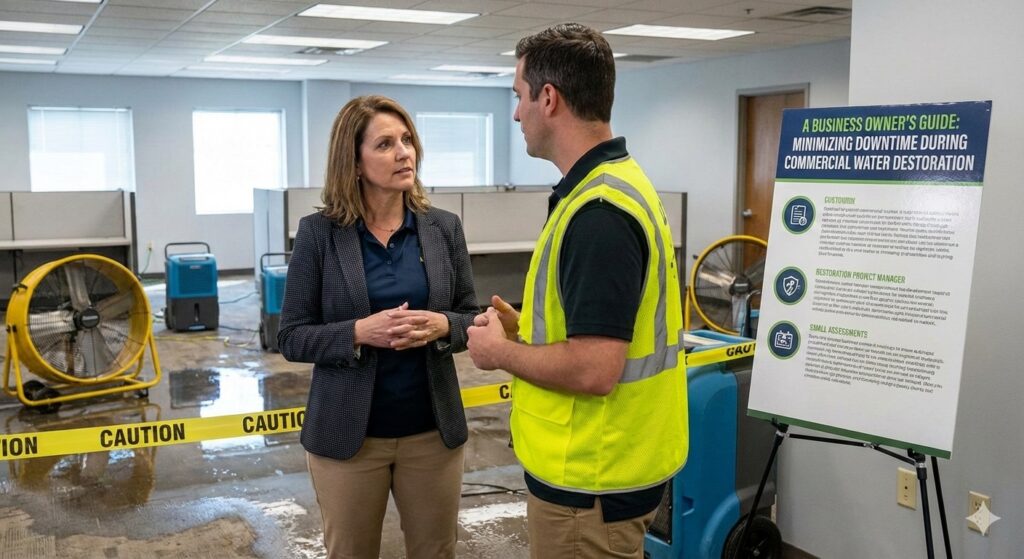
The First 60 Minutes: Simple Moves That Save Days:
Your decisions in the first hour after discovering water often determine how long your business stays closed. Here’s a practical sequence to follow.
- Protect people first.
If water is near outlets, power strips, or IT equipment, cut power to the affected area (not the entire building if you can avoid it) and block off unsafe zones. - Stop the source.
Shut off localized valves if you know where they are. If not, close the main water supply and call your plumber and water remediation company immediately. - Protect high-value contents.
Move electronics, paper records, product inventory, and upholstered furniture out of the wet area. Elevate items on tables, carts, or pallets instead of stacking them on the floor in a different room. - Start basic water control.
Use mops, squeegees, or wet vacs to remove standing water you can safely access. Don’t tear up flooring or cut walls yourself; that’s where a professional water damage restoration crew brings the right tools and drying strategy. - Document everything.
Take photos and short videos from multiple angles before and during cleanup. Capture equipment, damaged stock, and any areas that may be hidden once restoration starts.
Partner with a Water Remediation Company Before You Need One:
The worst time to start Googling “who handles water in commercial buildings?” is while water is already creeping under your server room door. Pre-vetting a water remediation company is one of the easiest risk-reduction moves you can make.
Look for a provider that:
Has deep experience with commercial water damage restoration service work, not just residential.
Offers 24/7 emergency response and can mobilize drying equipment quickly.
Understands local building types (older masonry, slab foundations, basements, medical or dental offices, etc.).
Is comfortable coordinating with property managers, HOAs, landlords, and insurance adjusters.
National brands with decades of experience in water, fire, and mold restoration have developed standardized processes, training, and equipment specifically to get properties back online safely and efficiently.
A quick pre-loss walkthrough with your chosen water damage restoration company can map out shutoff locations, priority areas to protect, acceptable after-hours access, and your preferred communication chain. When the time comes, you’re not starting from zero.
Keeping Operations Moving While Restoration Happens:
Minimizing downtime isn’t only about drying the building. It’s about keeping your business functional while water damage restoration is underway. An experienced commercial crew will help you think in zones:
Red zones: unsafe and fully offline.
Yellow zones: partially affected but usable with precautions.
Green zones: dry and safe for staff or customers.
For example:
A medical office might move check-in and billing to an unaffected wing while exam rooms are being dried.
A café could keep its drive-thru or online ordering open while the dining room is closed for floor replacement.
A small landlord might keep unaffected units occupied while fast-tracking mitigation in a single flooded unit to avoid wider disruption.
Clear communication is critical. Post simple signs, update Google Business profiles and social pages, and email regulars to explain what’s open, what’s closed, and when you expect normal operations to resume. Customers are usually understanding when they see a professional water damage restoration service on-site and know you’re handling the situation.
Documentation, Insurance & Communication That Speed Approvals:
One of the most underrated ways to reduce downtime is to make insurance decisions easier. Carriers want evidence, scope, and cost clarity. You want quick approvals.
Work with your water remediation company to:
Capture a timeline of the event: when it was discovered, when the source was shut off, when mitigation began.
Keep a photo log of affected areas before demo, during drying, and after repairs.
Track damaged contents by room and approximate value (especially inventory and specialized equipment).
Save invoices and reports from plumbers, electricians, and your water damage restoration contractor.
Because water is a leading cause of property insurance claims, many adjusters are used to these events and move faster when documentation is clear and complete. Good records also make it easier to evaluate business interruption coverage and justify lost revenue tied directly to the incident.
Building a More Resilient Property for Next Time:
Once the immediate crisis is over, the smartest owners use the experience to harden their buildings. In the U.S., an estimated 98% of basements will experience some kind of water intrusion during their lifespan. For older North Indianapolis properties, that number feels very real.
After your event, sit down with your water remediation company, plumber, or facility team and look at:
Sump pumps and drainage. Test pumps, check backup power options, and make sure downspouts and drains move water away from foundations.
Plumbing and roofing. Replace aging supply lines and worn roofing before they fail, especially in pre-1990 buildings.
Moisture monitoring. Consider leak detectors or smart sensors near critical areas like IT rooms, mechanical rooms, and restrooms.
Staff training. Make sure managers know where shutoff valves are, who to call first, and how to access your emergency plan.
These upgrades are far cheaper than another multi-day shutdown and show tenants, employees, and customers that you take their safety and continuity seriously.
FAQs: Minimizing Downtime During Commercial Water Damage Restoration:
Q1. How fast should I call a professional after discovering water in my building?
Ideally, you should contact a qualified water damage restoration service within the first hour of discovering significant water. The longer materials stay wet, the more likely you’ll see structural damage, odor, and mold growth, which can add days or weeks to your downtime and drive-up costs.
Q2. Can I stay partially open while commercial water damage restoration is happening?
Often, yes. An experienced water remediation company will help you separate the building into safe (dry) zones and unsafe (wet or demolition) zones. Many offices, clinics, gyms, and cafés keep limited operations running from unaffected areas while drying and repairs occur behind barriers or after hours.
Q3. What should be in my emergency plan for a water incident?
At minimum, your plan should include shutoff valve locations, after-hours contact details for your plumber and water damage restoration provider, a call tree for managers, a list of priority equipment/records to protect, and basic communication templates for staff and customers. Sharing this plan with your chosen water remediation company ahead of time helps them respond faster.
Q4. How long does commercial water damage restoration usually take?
Drying times vary based on the size of the affected area, how long materials were wet, and the type of construction. For many small commercial losses, active drying may take three to five days, followed by any needed repairs. Larger events or heavily saturated structures can take longer. Getting a water damage restoration service on-site quickly is the best way to shorten the overall timeline.
Final Thoughts:
Commercial water losses are stressful, but they don’t have to be catastrophic. When you treat water incidents as an operations problem, not just a cleanup problem, you start to see where planning, clear communication, and a trusted water remediation company can dramatically cut downtime.
A simple pre-loss plan, a first-hour checklist, and a restoration partner who understands North Indianapolis building realities will help you get from “we’re closed” back to “we’re open” as quickly and safely as possible.